43 3 laws of robotics
Three Laws of Robotics - Halopedia, the Halo wiki The Three Laws of Robotics are conditions to which artificial intelligences are subject to: A robot may not injure a human being or, through inaction, allow a human being to come to harm. A robot must obey any orders given to it by human beings, except where such orders would conflict with the First Law. THE THREE LAWS OF ROBOTICS - St.Britto's Academy INTRODUCTION "The Three Laws of Robotics: 1: A robot may not injure a human being or, through inaction, allow a human being to come to harm; 2: A robot must obey the orders given by human beings except where such orders would conflict with the First Law; 3: A robot must protect its existence as...
What are Issac Asimov''s three laws of robotics? Are they ... Skip to main content · Paul Peters, Tottenham, UK First Law: A robot may not injure a human being, or, through inaction, allow a human being to come to harm. Second Law: A robot must obey orders given it by human beings, except where such orders would conflict with the First Law.

3 laws of robotics
What Are the 3 Laws of Robotics? And Do We Adhere to Them ... One such author was Isaac Asimov, who, in his works, defined the Three Laws of Robotics. To him and to the audience of his time, all of that was science-fiction. Considering the stories taking ... The 3 Laws of Robotics - Department of Computer Science Related Papers: AI Armageddon and the Three Laws of Robotics · As a high school student, I started reading some of Isaac Asimovs short stories and novels. One of the most prolific Science Fiction writers ever, Asimov credits himself as being the person to use the term robotics in print. Three laws of robotics and surgery - PubMed His First Law states: "A robot may not injure a human being, or, through inaction, allow a human being to come to harm. " This philosophy would directly conflict with the application in surgery. In fact, most of his robotic stories deal with robots that come into conflicts with the laws.
3 laws of robotics. Mark Tilden - Wikipedia Mark W. Tilden is a robotics physicist who produces complex robotic movements from simple analog logic circuits, often with discrete electronic components, and usually without a microprocessor. He is controversial because of his libertarian Tilden's Laws of Robotics , [1] and is known for his invention of BEAM robotics and the WowWee Robosapien ... Explanation of the 3 Laws of Robotics - Futurite Asimov's 3 laws state that: "A robot may not injure a human being or, through inaction, allow a human being to come to harm." "A robot must obey the orders given it by human beings except where such orders would conflict with the First Law." Robotergesetze - Wikipedia Die Robotergesetze (englisch Three Laws of Robotics) wurden von Isaac Asimov in seiner Kurzgeschichte Runaround (Astounding, 1942) als „Grundregeln des ... Isaac Asimov's "Three Laws of Robotics" Isaac Asimov's "Three Laws of Robotics" Isaac Asimov's "Three Laws of Robotics" A robot may not injure a human being or, through inaction, allow a human being to come to harm. A robot must obey orders given it by human beings except where such orders would conflict with the First Law.
Three Laws of Robotics ( Complete Details) - Thordrc Three Laws of Robot ics Asimov's gives rules to safeguard people against robotic interactions. They are: A robot cannot hurt a person or enable a person to harm via inactivity. A robot must obey human beings' guidance unless such commands contradict the first law. After 75 years, Isaac Asimov's Three Laws of Robotics need ... The Three Laws Asimov's suggested laws were devised to protect humans from interactions with robots. They are: A robot may not injure a human being or, through inaction, allow a human being to come... Isaac Asimov's Laws of Robotics Are Wrong - Brookings Isaac Asimov's Laws of Robotics Are Wrong. When people talk about robots and ethics, they always seem to bring up Isaac Asimov's "Three Laws of Robotics.". But there are three major ... The Importance of Issac Asimov's Three Laws of Robotics To help alleviate this problem, ... Laws of Robotics, which state: 1) A robot may not injure a human being, or, through inaction, allow a human being to come to harm. 2) A robot must obey the orders given it by human beings except where such orders would conflict with the First Law. 3) A robot must ...
Isaac Asimov and the Three Laws of Robotics - SciHi ... The Three Laws of Robotics 1.A robot may not injure a human being or, through inaction, allow a human being to come to harm. 2. A robot must obey the orders given to it by human beings, except where such orders would conflict with the First Law. 3. Three Laws Of Robotics - 1619 Words | Bartleby Three Laws Of Robot Essay 1153 Words | 5 Pages. Effectiveness of Isaac Asimov`s Three Laws of Robotics In 1950 a collection of short stories by Isaac Asimov gathered under a name I, Robot was first published commencing a whole new era in the field of fiction. 3 Laws Robotics - Engineered Autonomy Solutions The principals of 3-Laws Robotics are scientists and engineers with extensive experience in the operations, systems and software/firmware of autonomous systems. They are recognized experts at the forefront of research and engineering developments in these areas. Several also have clearances to work on sensitive projects. Asimov's Laws Won't Stop Robots from Harming Humans, So ... 11 Jul 2017 — The Three Laws · A robot may not injure a human being or, through inaction, allow a human being to come to harm. · A robot must obey the orders ...
Isaac Asimov 3 Gesetze Der Robotik Linie Symbol ...
Three Laws of Robotics | concept by Asimov | Britannica Other articles where Three Laws of Robotics is discussed: science fiction: Alien encounters: Asimov’s famous Three Laws of Robotics are as follows: “(1) a robot may not injure a human being or, through inaction, allow a human being to come to harm; (2) a robot must obey the orders given ...
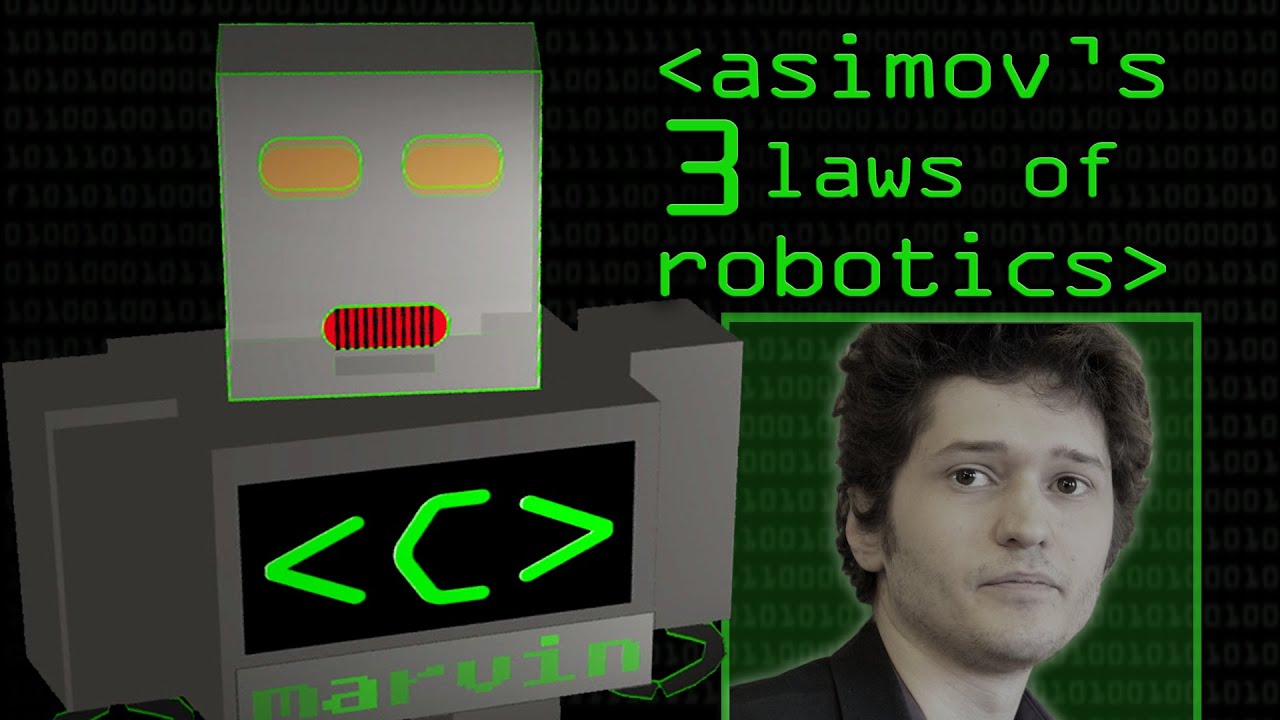
Why Asimov's Laws of Robotics Don't Work - Computerphile
What are Asimov's Three Laws Of Robotics? - Definition ... The Three Laws of Robotics can be found in Asimov's 5-book "Robot" series of novels, and in some of the 38 short stories which the author wrote from 1950 to 1985. Another series, the "Foundation" series, began in the 1950s and finished in 1981.
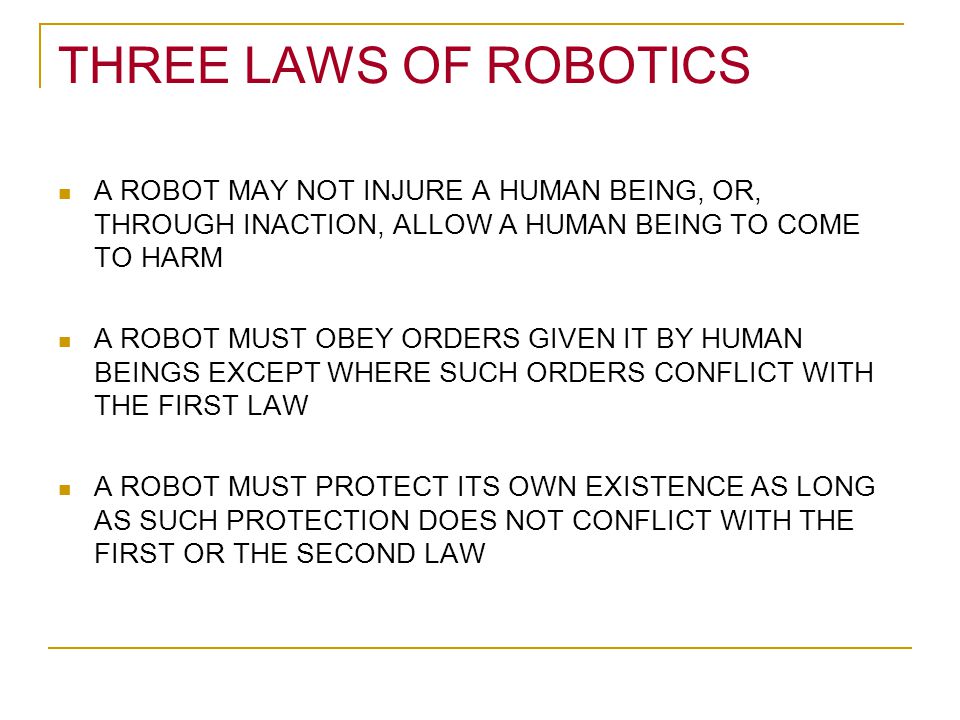
ISAAC ASIMOV I, ROBOT. - ppt video online download
PDF Three Laws of Robotics' and Machine Metaethics Three Laws immoral. (4) Even if the machines that are actually developed fall short of being like Andrew and should probably not be considered to have moral standing/rights, it is still problematic for humans to program them to follow the Three Laws of Robotics. From (3) and (4), we can conclude that (5) whatever the status

Isaac Asimov 3 Laws Vector & Photo (Free Trial) | Bigstock
The new laws of robotics — building on Asimov's science fiction ... December 11, 2020 - Way back in 1942, science fiction writer Isaac Asimov created the Three Laws of Robotics. Now, an AI expert has expanded that list in a bid to ensure the robotics revolution works for humans, not against them.
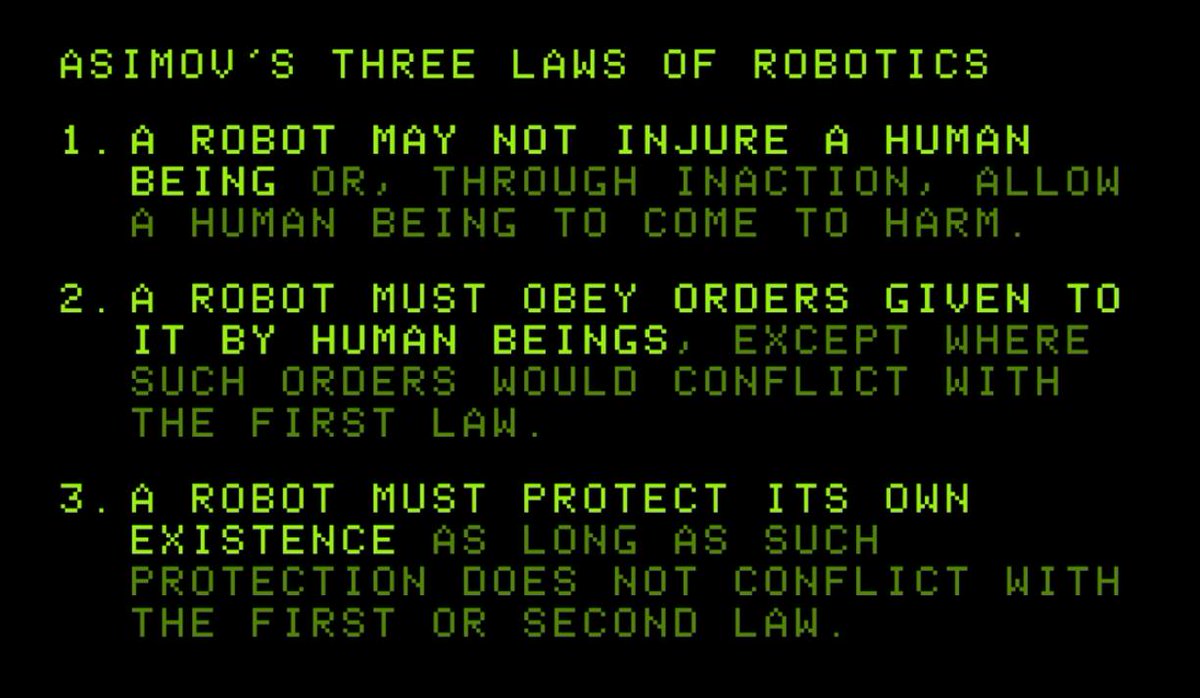
Richard Hay 在Twitter 上:"Asimov's Three Laws of Robotics ...
Recursion Vs Loop - C2 wiki August 4, 2021 - This site uses features not available in older browsers
isaac asimov 3 laws of robotics glyph icon vector ...
Three Laws of Robotics | Intelligent Robots The Three Laws of Robotics, often shortened to The Three Laws or Three Laws, are a set of three rules written by science fiction author Isaac Asimov and later expanded upon. The rules are introduced in his 1942 short story "Runaround" although they were foreshadowed in a few earlier stories.
In terms of machine ethics, what are the flaws of Asimov's ...
The 3 Laws that Stop Robots From Taking Over The World Isaac Asimov's 3 laws of robotics are as follows: A robot may not injure a human being or, by failing to act, allow a human being to come to harm. A robot must obey orders given to it by human beings, except where carrying out those orders would break the First Law.
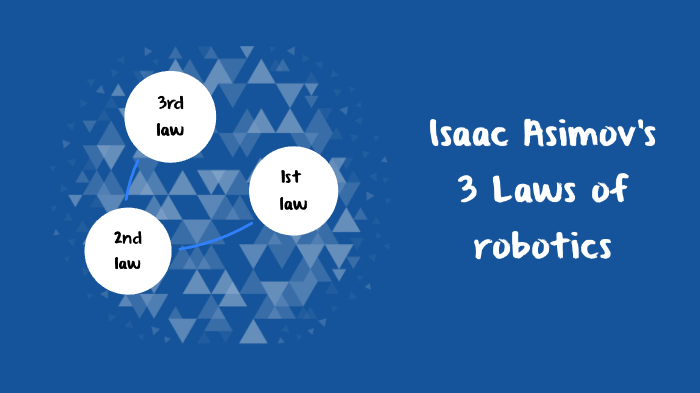
Isaac Asimov's 3 laws of robotics by Chloe Ebelhar - AHS 2023
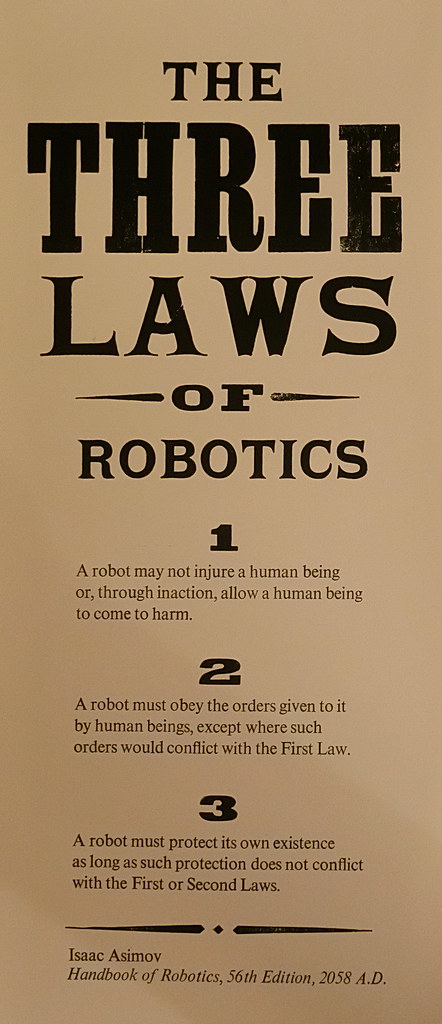
Three Laws of Robotics - Wikipedia The Three Laws, quoted from the "Handbook of Robotics, 56th Edition, 2058 A.D.", are: First Law A robot may not injure a human being or, through inaction, allow a human being to come to harm. Second Law A robot must obey the orders given it by human beings except where such orders would conflict with the First Law. Third Law
small talk 2.0: April 2020
Three Laws of Robotics - Prometheus Blog Recent Posts. Robot rights, practical autonomy and character-driven comedy: An appreciation of Mark Stanley's webcomic Freefall, the 2017 Special Prometheus Awardwinner

Kobo Ereader - Asimov 3 Laws of Robotics | Neerav Bhatt | Flickr
Asimov's Three Laws of Robotics | E&T Magazine June 15, 2015 - It fooled 11 of the 30 judges, at least for the short time it took to run the test. Veselov has no illusions about the state of play. “We can’t really talk about a historic step in the development of artificial intelligence,” he cautions. “It’s the robot as a literary and psychological ...

Asimov's Three Laws of Robotics - Robots - Sticker | TeePublic AU
Programming Morality: Isaac Asimov’s Three Laws of Robotics September 6, 2019 - Isaac Asimov’s Three Laws of Robotics have defined the conversation around the development of human-like robots since the 1940s.

Robots Breaking Asimov's Laws Of Robotics - Geekologie
What are Asimov's Three Laws Of Robotics? - Definition ... Asimov's Three Laws are as follows: A robot may not injure a human being or allow a human to come to harm. A robot must obey orders, unless they conflict with law number one. A robot must protect its own existence, as long as those actions do not conflict with either the first or second law.

75 Years Later, Isaac Asimov's Three Laws of Robotics Need ...
Asimov's Three Laws of Robotics + the Zeroth Law : History of ... 3 weeks ago - In the March 1942 issue of Astounding ... Laws of Robotics in his short story "Runaround." The Three Laws are: 1. A robot may not injure a human being or, through inaction, allow a human being to come to harm. 2. A robot must obey the orders given to it by human beings, except where such orders would conflict with the First Law. 3...

Asimov's 3 Laws of Robotics! Written in 1942. Where are we ...
Where did the Three Laws of Robotics come from ... The best known set of laws are Isaac Asimov's "Three Laws of Robotics". These were introduced in his 1942 short story "Runaround", although they were foreshadowed in a few earlier stories. The Three Laws are: A robot may not injure a human being or, through inaction, allow a human being to come to harm.
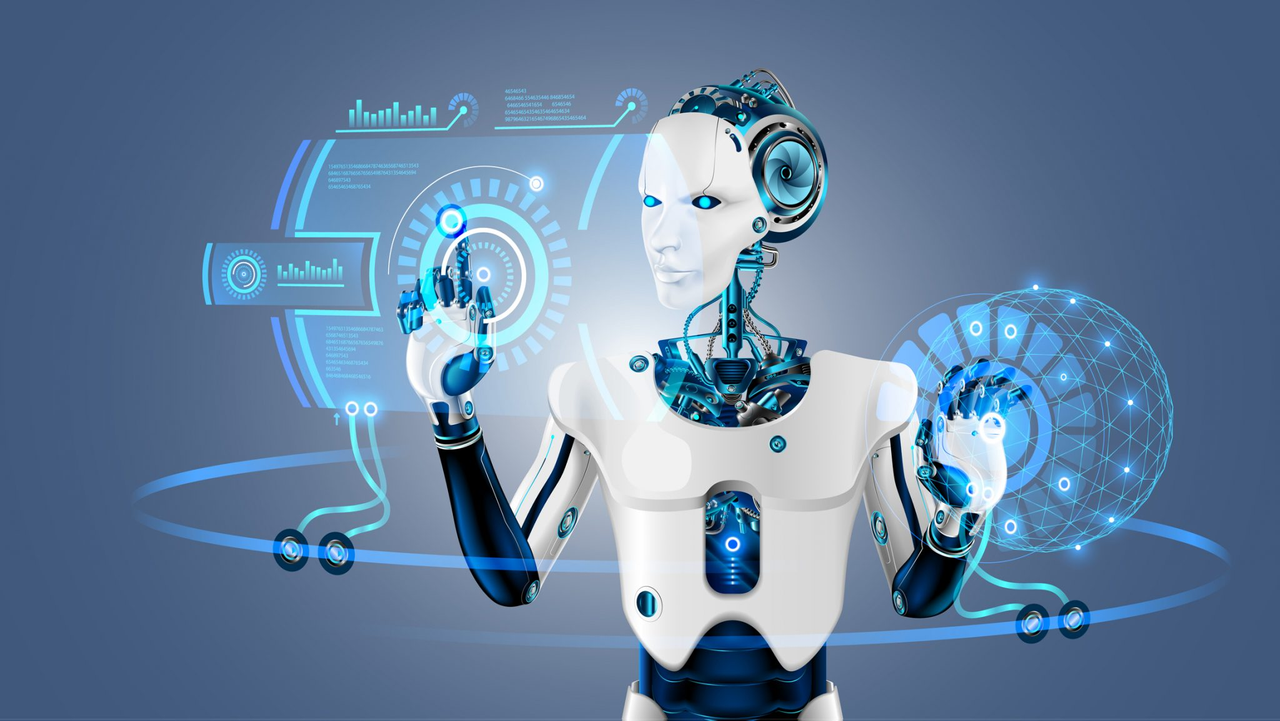
Starting A Conversation About Asimov's 3 Laws of Robotics ...
Three Laws of Robotics | Asimov | Fandom The Three Laws of Robotics, also called the Three Fundamental Rules of Robotics, or the Four Laws of Robotics after the addition of the Zeroth Law, are fundamental laws that are inculcated into the positronic brains of all robots in Isaac Asimov 's Robot series and more generally in his Foundation Universe.

Sign in | Dark green aesthetic, Green aesthetic, Three laws ...
Frontiers | Empowerment As Replacement for the Three Laws of Robotics ... July 29, 2017 - Arguably, the best-known suggestion ... Laws of Robotics (Asimov, 1942): 1. A robot may not injure a human being or, through inaction, allow a human being to come to harm. 2. A robot must obey the orders given to it by human beings, except where such orders would conflict with the First Law. 3...
Pasquale, Frank. New Laws of Robotics: Defending Human ...
Laws of robotics - Wikipedia The Three Laws are: A robot may not injure a human being or, through inaction, allow a human being to come to harm. A robot must obey the orders given it by human beings except where such orders would conflict with the First Law. A robot must protect its own existence as long as such protection does not conflict with the First or Second Laws.
![PDF] Beyond Asimov: The Three Laws of Responsible Robotics ...](https://d3i71xaburhd42.cloudfront.net/38edbfa3f8fc6612b315bf2c526d90dba6fbf5cb/6-Table1-1.png)
PDF] Beyond Asimov: The Three Laws of Responsible Robotics ...
The Mystical Three Laws of Robotics - Automated Curiosity The Three Laws of Robotics are a pretty interesting topic to read about in books, see in movies and hear on the news. But, that's all it is. It's just a fancy way that did help out a lot back in the day when people were still extremely skeptical regarding the uses of robotics and whether it would help or just cause problems.
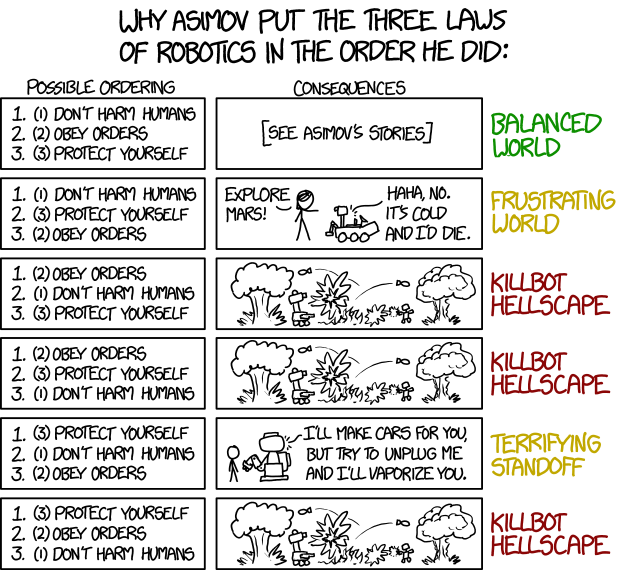
1613: The Three Laws of Robotics - explain xkcd
(PDF) Introduction to Robotics - ResearchGate Robotics can ease peoples life, in the industrial and home environment. When talking about homes, robot may assist people in some domestic and tasks, done in repeat.
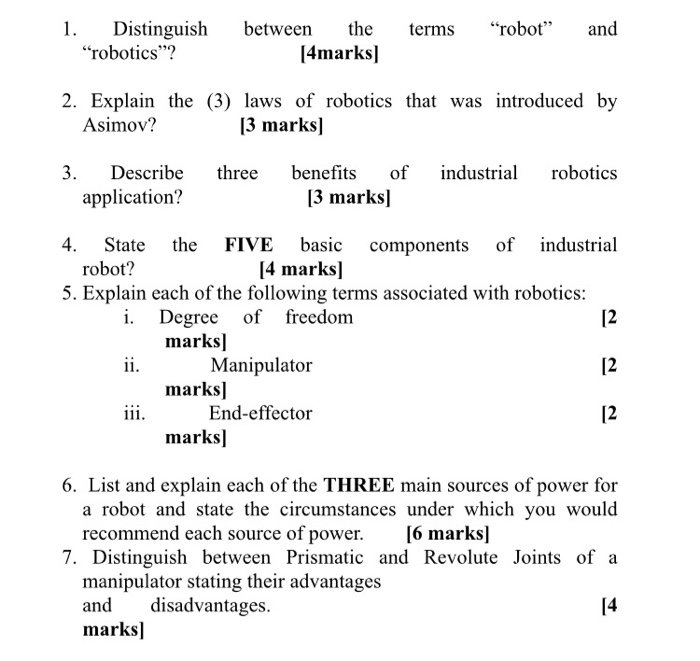
Solved terms "robot" and 1. Distinguish "robotics"? between ...
The Three Laws of Robotics Have Failed the Robots | Mind Matters October 1, 2019 - I wonder if a logical consequence of the 3 robot laws that the robots must teach humans objective moral laws, e.g. in order to avoid “through inaction, allow a human being to come to harm.” So, for instance, the robots would bring a halt to all war, abortions, and euthanasia throughout ...
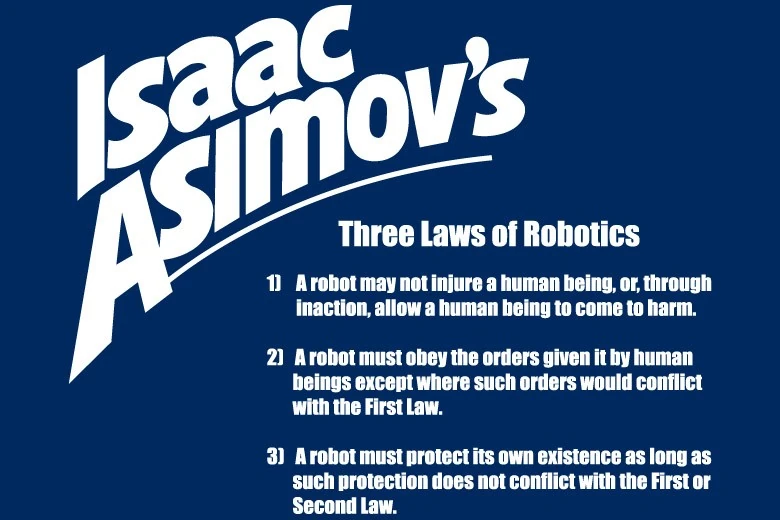
Asimov's three Laws | Galnet Wiki | Fandom
Three Laws-Compliant - TV Tropes Asimov eventually took one of the ... health of an individual human. Stories by other authors occasionally proposed additional extensions, including a -1st law (sentience as a whole trumps humanity), 4th (robots must identify themselves as robots), a different 4th (robots are free to pursue other interests when not acting on the 1st-3rd laws) and ...
After 75 years, Isaac Asimov's Three Laws of Robotics need ...
Three Laws of Robotics The Three Laws form an organizing principle and unifying theme for Asimov's fiction, appearing in his Robot series and the other stories linked to it, as well as Lucky Starr and the Moons of Jupiter. Other authors working in Asimov's fictional universe have adopted them, and references (often ...
Robotic Laws, 978-613-6-03301-3, 6136033011 ,9786136033013
Three Laws of Robotics - Conscious Entities A robot may not injure a human being or, through inaction, allow a human being to come to harm. A robot must obey the orders given to it by human beings, except where such orders would conflict with the First Law. A robot must protect its own existence as long as such protection does not conflict with the First or Second Law.

Amazon.com: The Three Laws of Robotics Rules Science Fiction ...
Amazon.com: 3 Laws of Robotics - Card Game : Toys & Games Computer deduction geekery at its finest rules your gaming table with 3 Laws of Robotics. This game is an easy hit and must have for your friendly computer tech, robot fans, engineers, Asimov fans, teens, adults, anyone who likes cute artwork, your next door neighbor, and probably most anyone who enjoys a bit of science fiction.
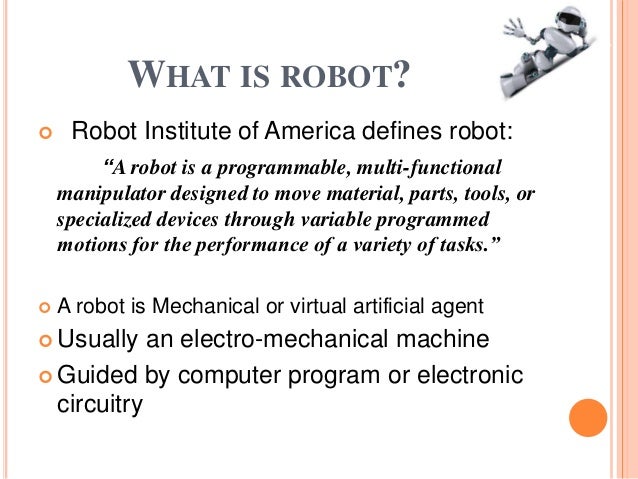
Introduction to robotics, Laws,Classification,Types, Drives ...
What Are Three Laws Of Robotics? - Programming & Design Issac Asimov proposed the Three Laws of Robotics in order to alleviate this problem. These laws state: 1) A robot cannot harm a human being, or, if it does not act, allow a human being to do so. In order for a robot to be protected, it must not conflict with the First or Second Laws.

Elvex Robot Storyboard von d2b7c2a0
The Three Laws of Robotics in the Age of Big Data The most famous feature of these robot stories is Asimov's three laws of robotics that were built into every robot's positronic brain. The three laws are: First Law: "a robot may not injure a human being, or, through inaction, allow a human being to come to harm." Second Law: "a robot must obey the orders given it by human beings except where ...

Is 3 Laws of Robotics fun to play?
Three laws of robotics and surgery - PubMed His First Law states: "A robot may not injure a human being, or, through inaction, allow a human being to come to harm. " This philosophy would directly conflict with the application in surgery. In fact, most of his robotic stories deal with robots that come into conflicts with the laws.
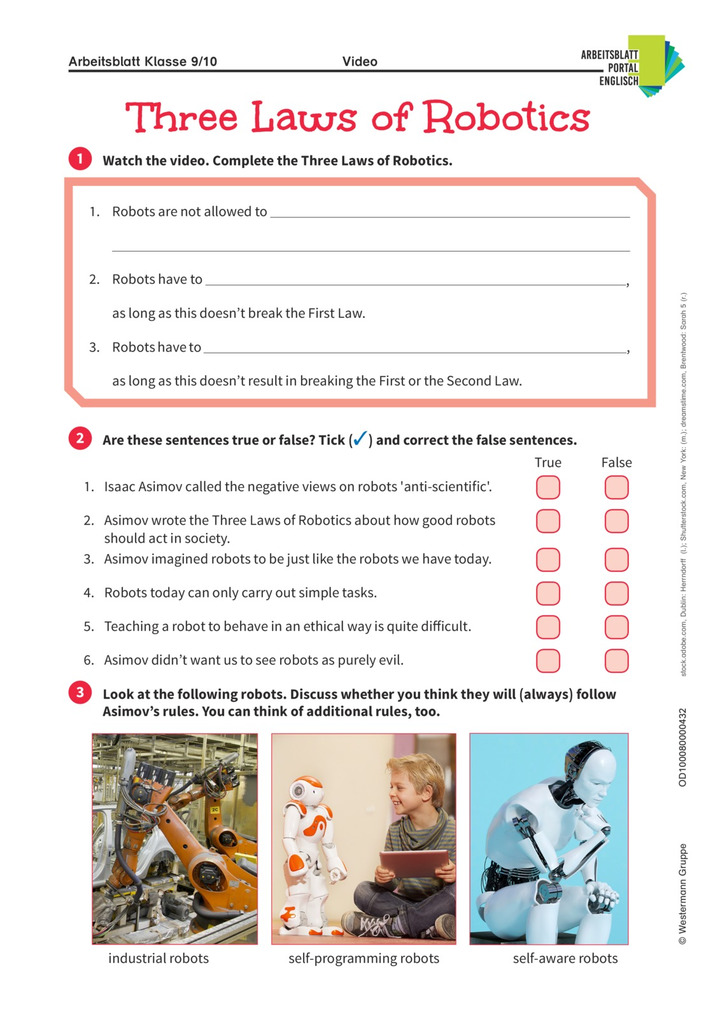
The Three Laws of Robotics - Arbeitsblatt zum Video über die ...
The 3 Laws of Robotics - Department of Computer Science Related Papers: AI Armageddon and the Three Laws of Robotics · As a high school student, I started reading some of Isaac Asimovs short stories and novels. One of the most prolific Science Fiction writers ever, Asimov credits himself as being the person to use the term robotics in print.
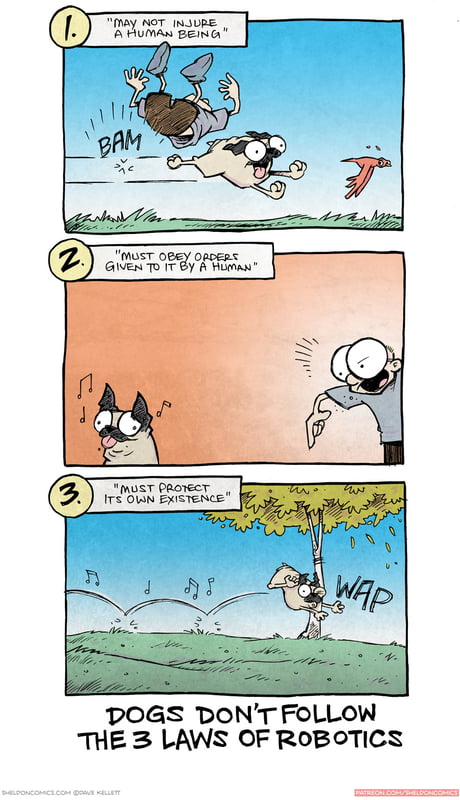
Dogs Don't Follow The 3 Laws Of Robotics - 9GAG
What Are the 3 Laws of Robotics? And Do We Adhere to Them ... One such author was Isaac Asimov, who, in his works, defined the Three Laws of Robotics. To him and to the audience of his time, all of that was science-fiction. Considering the stories taking ...
Asimov's laws of robotics are nonsense | by Wesley Abbey | Medium

Robert Madelin 在Twitter 上:"Fourth law of robotics needed ...

The Three Laws of Robotics (often shortened to
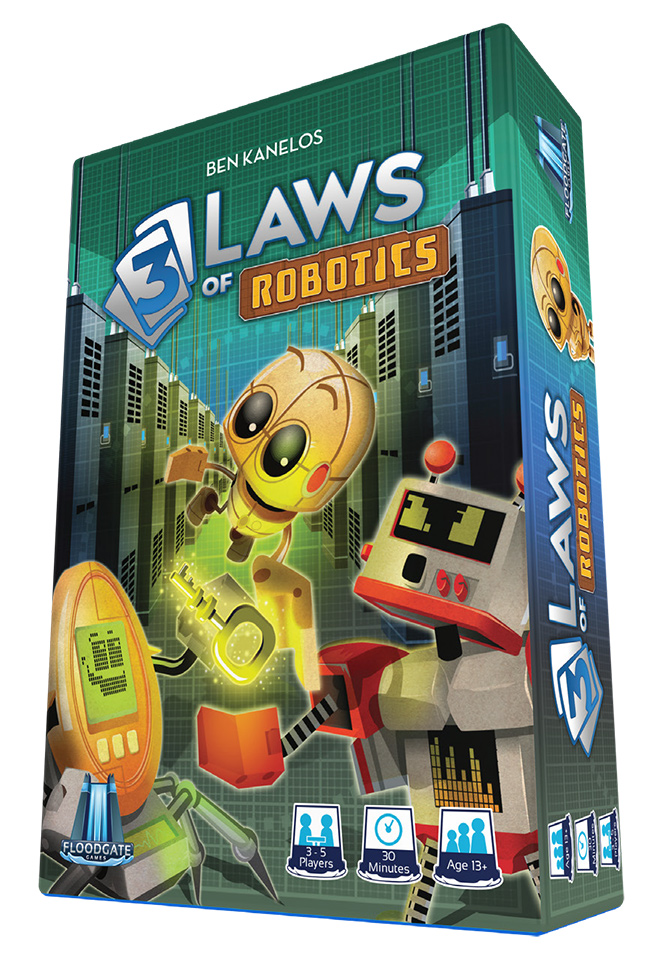
Find Your Faction In 3 laws Of Robotics From Floodgate Games ...

3 Laws of Robotics Game Review — Meeple Mountain

Asimov's Three Laws of Robotics
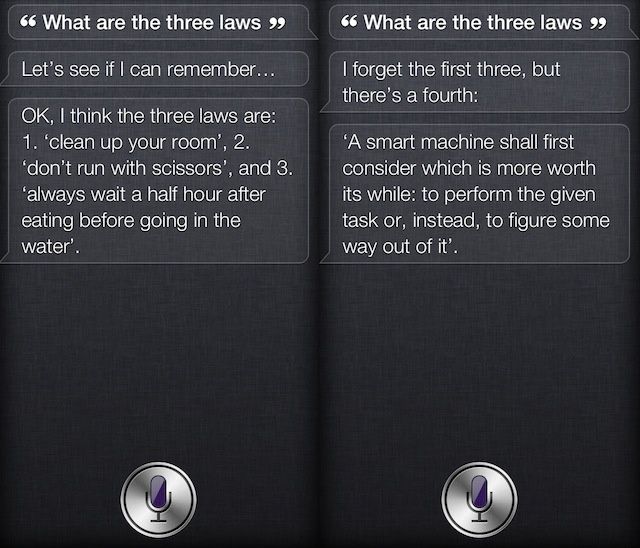
Siri Thinks The Three Laws Of Robotics Start With "Clean Your ...

3 laws of robotics my ass : r/AutistenToren

I, Robot Three Laws of Robotics 0, others, black, silhouette ...

The Laws of Robotics — the urban engine

i, robot isaac asimov - classic science fiction stories

3 Robot Laws | Who Created the Rules of Robotics

Do Isaac Asimov's Laws of Robotics need an update? | ABB

Three Laws of Robotics | Bradscribe
0 Response to "43 3 laws of robotics"
Post a Comment